
Avoid forcing the door
You should not force it, and you should not run the opener hoping it clears. Running the opener against a seized track is how a cable repair turns into a track and roller repair.
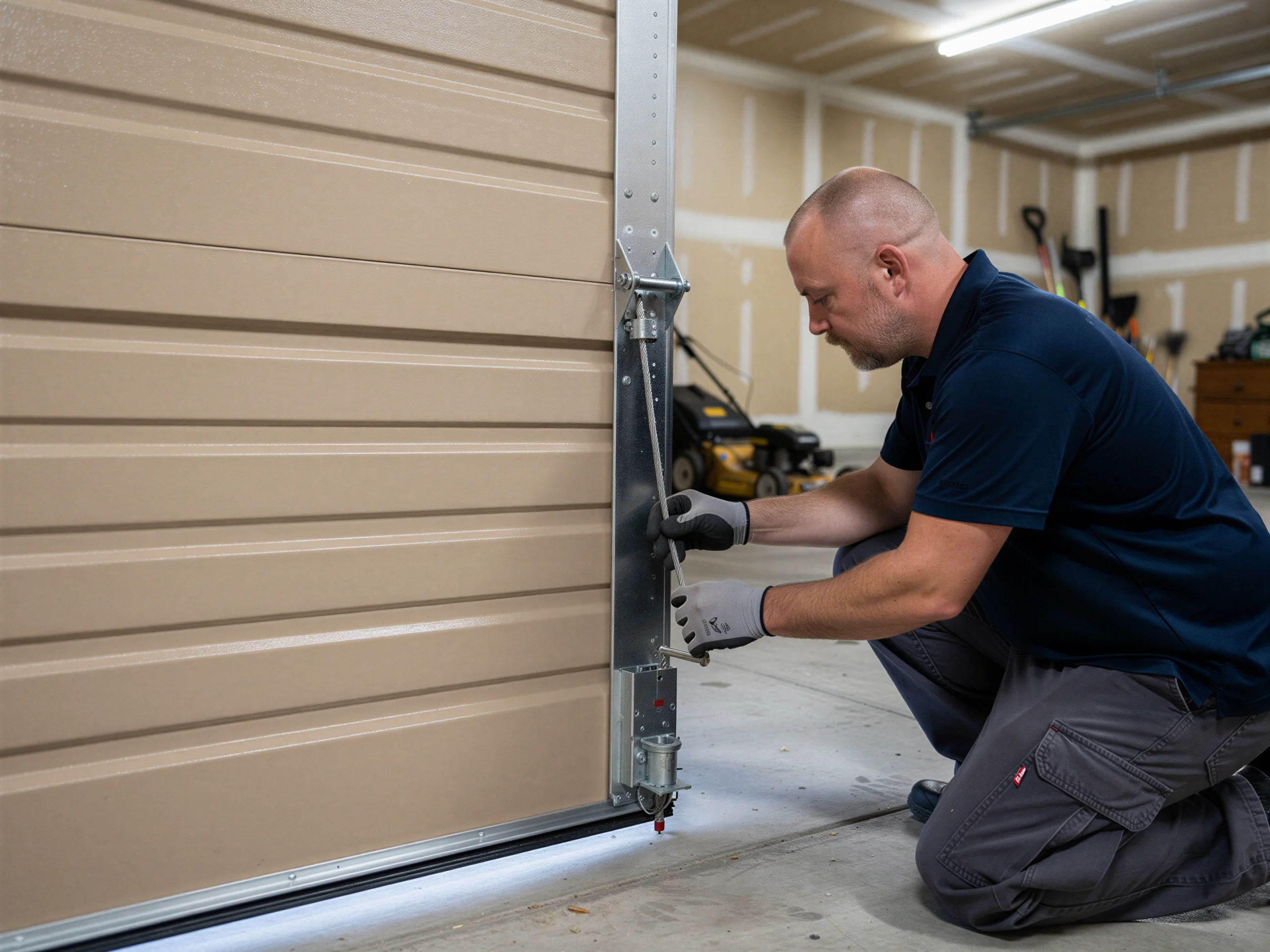
Mission Viejo, CA
Frayed or snapped garage door cable in Mission Viejo? We explain why it happens in homes built 1938-2015, what to expect, and when to skip the DIY fix.
Local causes
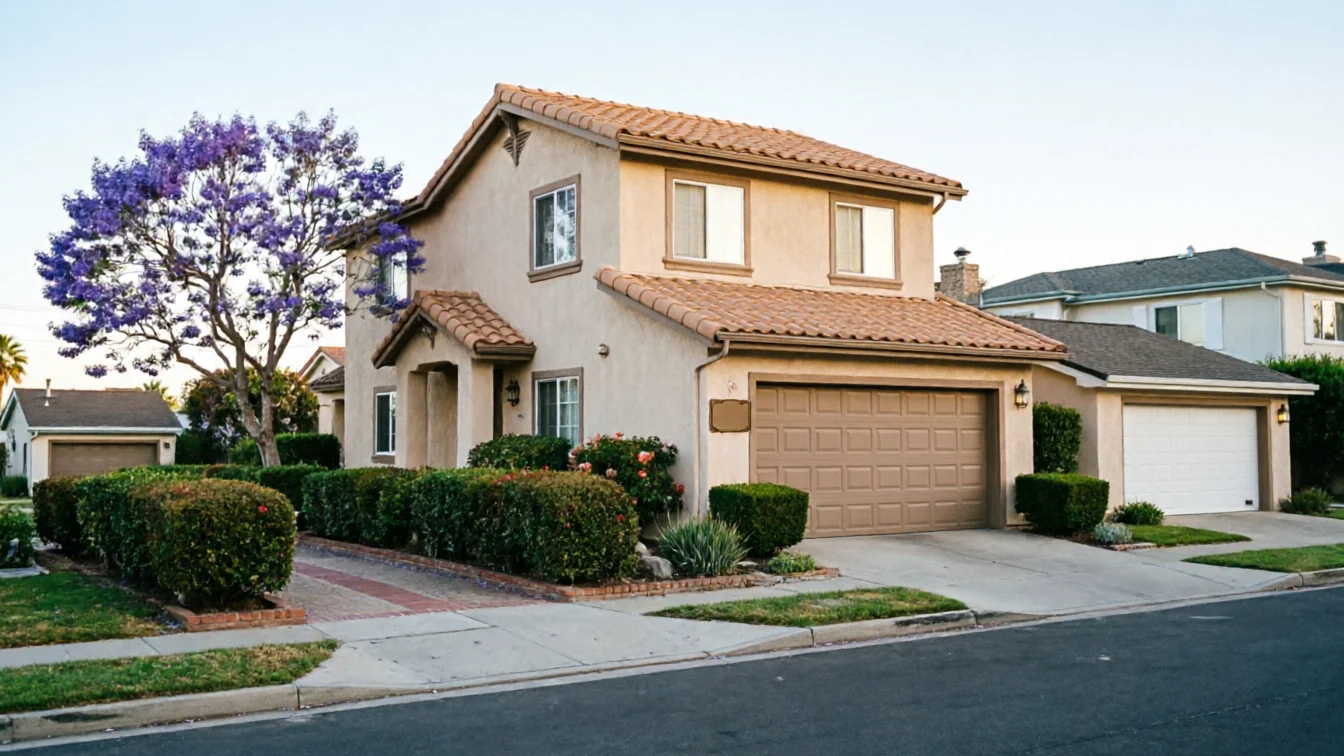
Mission Viejo's housing stock runs from 1938 through 2015, with the median build year landing around 1983. That means a large share of the doors in this service area are original to houses now pushing forty years old, and the lift cables on those doors are the same galvanized steel wound around the same drums since the 1980s and 90s building boom that shaped most of the 20 named areas here. Steel cable doesn't last forever even when it never sees rain. It works by friction and bend, running over a drum and through a pulley thousands of times a year, and each pass wears a few more strands.
The area sits in a mild temperate climate, so you're not dealing with freeze-thaw cracking or road-salt corrosion the way a cable would fail back east. What you get instead is slower, quieter fatigue: UV exposure on the exposed run near the bottom bracket, dust and grit working into the strands, and small kinks from a door that's been slightly out of balance for years. By the time a cable actually lets go, it's usually been fraying for months. The climate buys you time here. It doesn't buy you immunity.
Downtime
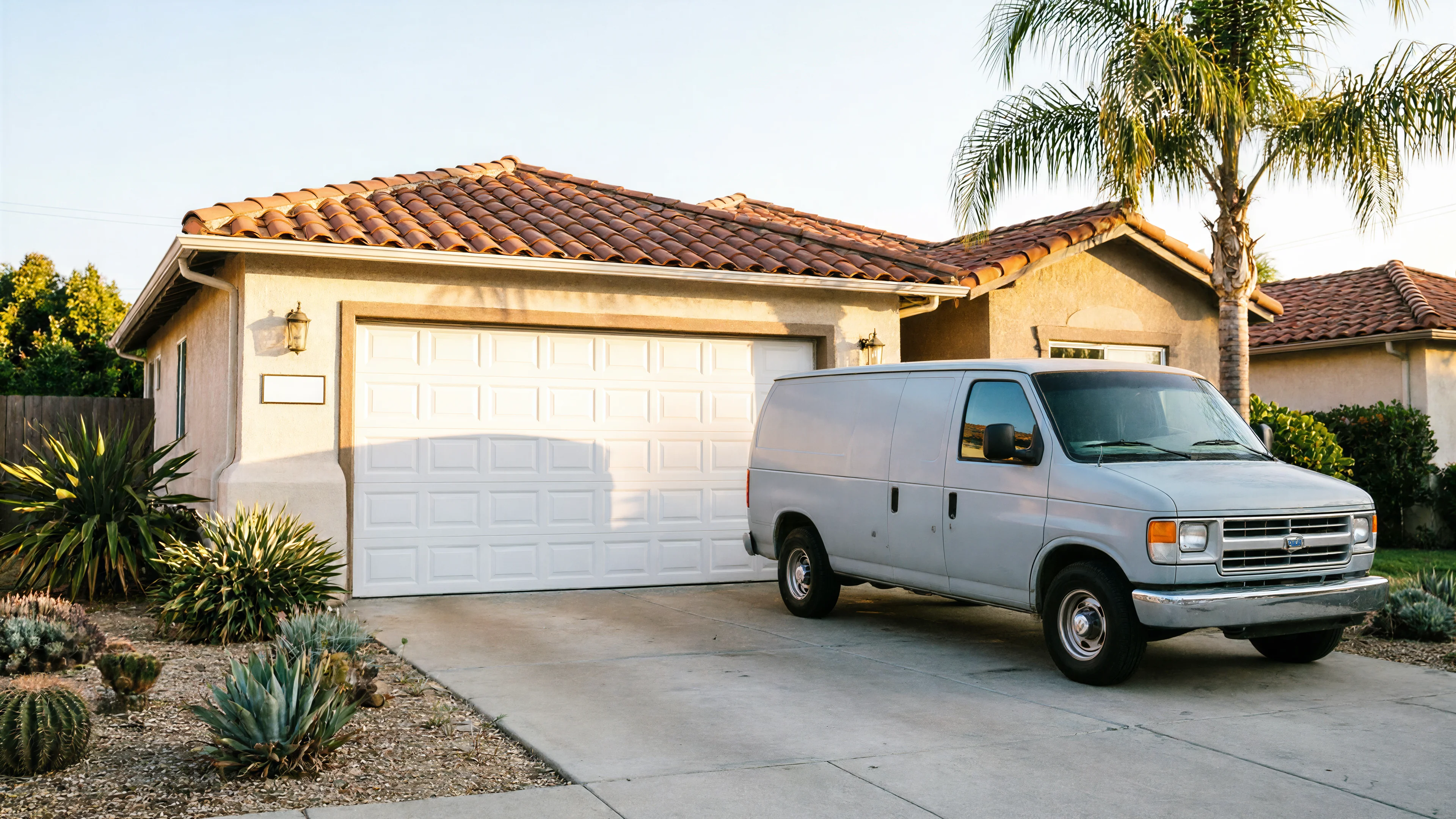
A single snapped cable on a double door usually means the door is stuck, either jammed half-open or sitting crooked on one track because the other cable is still holding tension.
You should not force it, and you should not run the opener hoping it clears. Running the opener against a seized track is how a cable repair turns into a track and roller repair.
Most cable jobs are a same-visit fix once the right length and gauge are on the truck: pull the old cable, check the drum and pulley for grooving, and reset tension on both sides so the door doesn't drift again in six months. The part that stretches a job past one visit isn't the cable itself, it's what the cable damage did on the way out.
If the cable snapped under load and let the door drop, check the bottom section and the opener's top bracket before assuming cable alone will solve it. Across the 172,061 households and roughly 80,921 owner-occupied houses in this service area, that secondary damage is the more common reason a repair takes a second trip, not the cable itself.
Symptoms
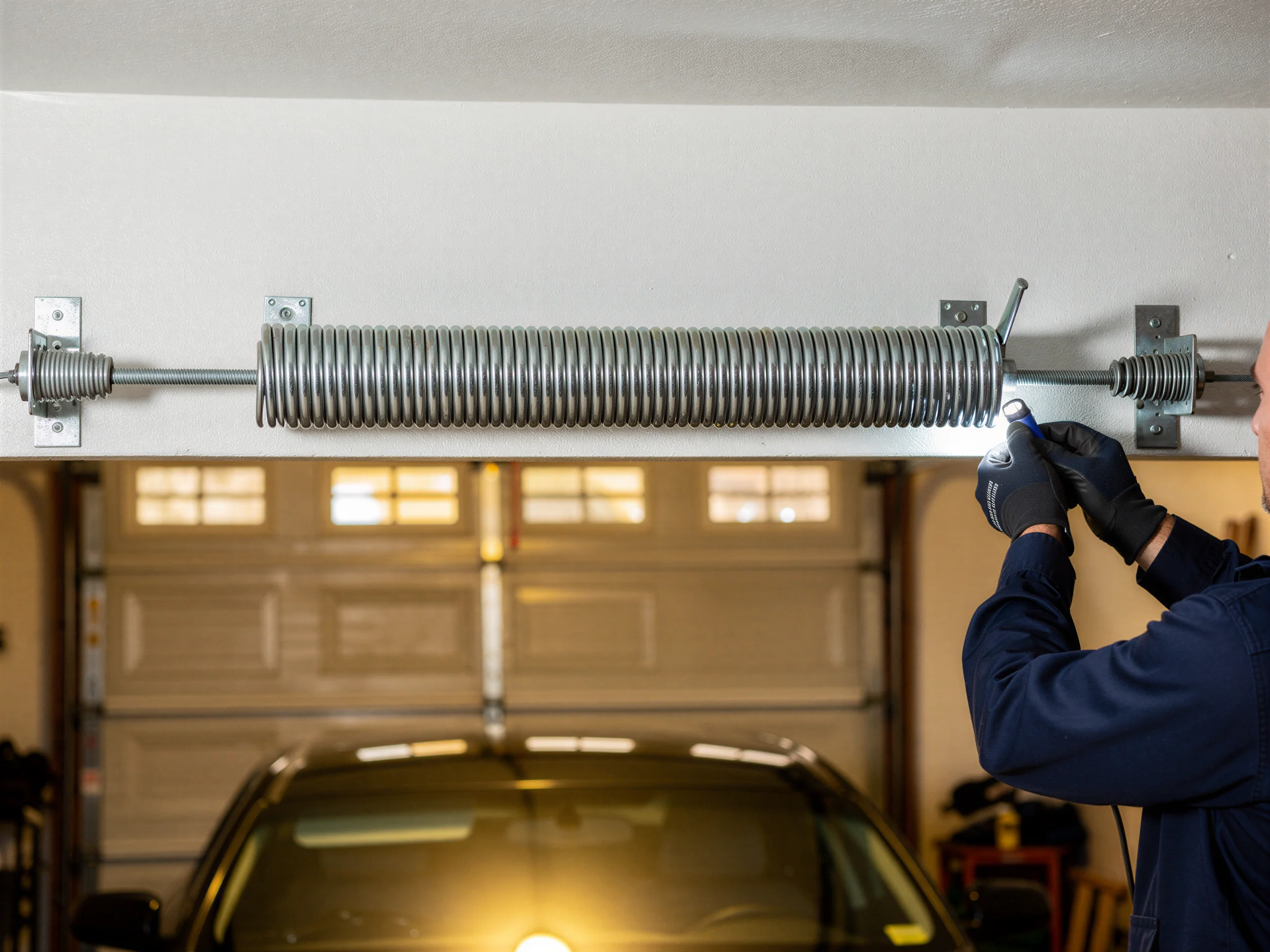
A healthy cable is invisible. You don't think about it. A failing one usually gives you a tell before it snaps outright: one corner of the door sits lower than the other when it's down, the door drifts sideways as it travels, or you hear a dull pop followed by the door dropping a few inches on one side. Sometimes it's quieter than that, just a slight lean you've gotten used to.
A fully snapped cable is harder to miss. The door won't open at all, or it opens a few inches and binds, because one side is still anchored and the other is loose wire hanging off the drum. If you can see the cable itself, look for broken strands poking out like a frayed rope, rust bloom at the end fittings, or a kink where it's been riding wrong on the drum. None of that fixes itself, and none of it gets better by running the door through another cycle.
DIY or pro
A garage door cable is under real tension even on a door that looks still. That tension is what lets the door lift smoothly, and it's also what makes a cable dangerous to work on without the right clamps and bar.
We don't recommend DIY cable replacement, full stop. This is one of the honest limits of the job: a broken spring gets talked about more, but a cable under load can whip hard enough to hurt you, and there's no safe shortcut version of the tools that hold tension while you swap it.
What you can safely do yourself is diagnose. Look at the cable, check whether the door is crooked, and note whether the problem is one side or both.
That tells whoever comes out what to bring. Past that, cable work is a call-the-pro job, not a weekend-project job, and that's true whether your house went up in 1958 or 2008.
Questions
It rarely happens with zero warning, it's just that the warning signs (a slight lean, a faint drift) are easy to miss day to day. Cable failure is fatigue, not a single event, so the snap is the end of a slow process, not a sudden one.
You can, but it's not a great idea. If one cable is old enough to fray, the other one matched it in age and use. Most jobs replace both sides so you're not back out here in a few months for the second cable.
Not really faster, just differently. The mild temperate climate here spares cables the freeze-thaw and road-salt corrosion that wrecks them elsewhere, so failure here comes mostly from age and wear, not weather damage.
Explore more
Ready when you are
Mission Viejo Garage Door Pros repairs and installs garage doors, springs and openers in Mission Viejo, CA and the surrounding area.