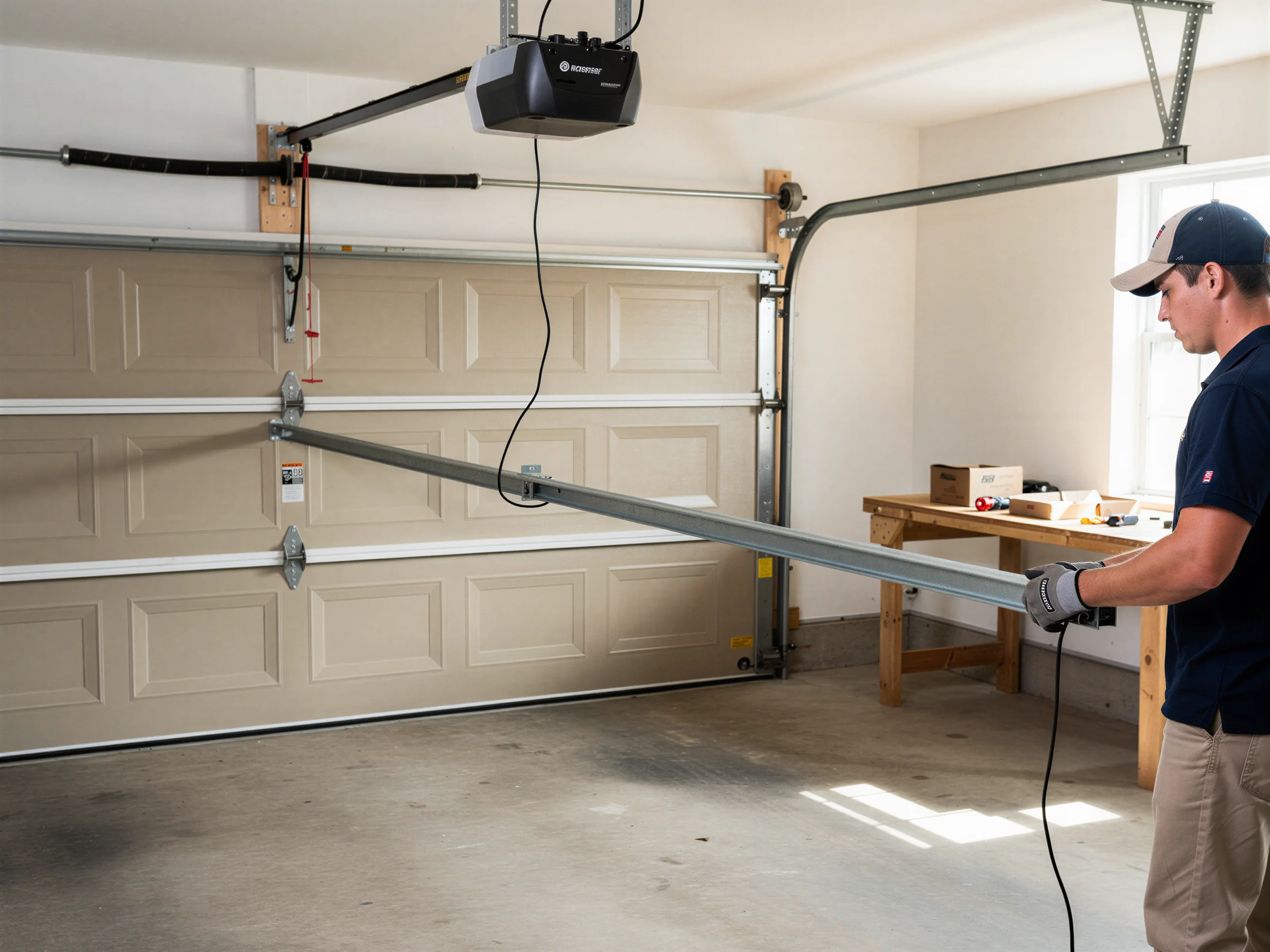
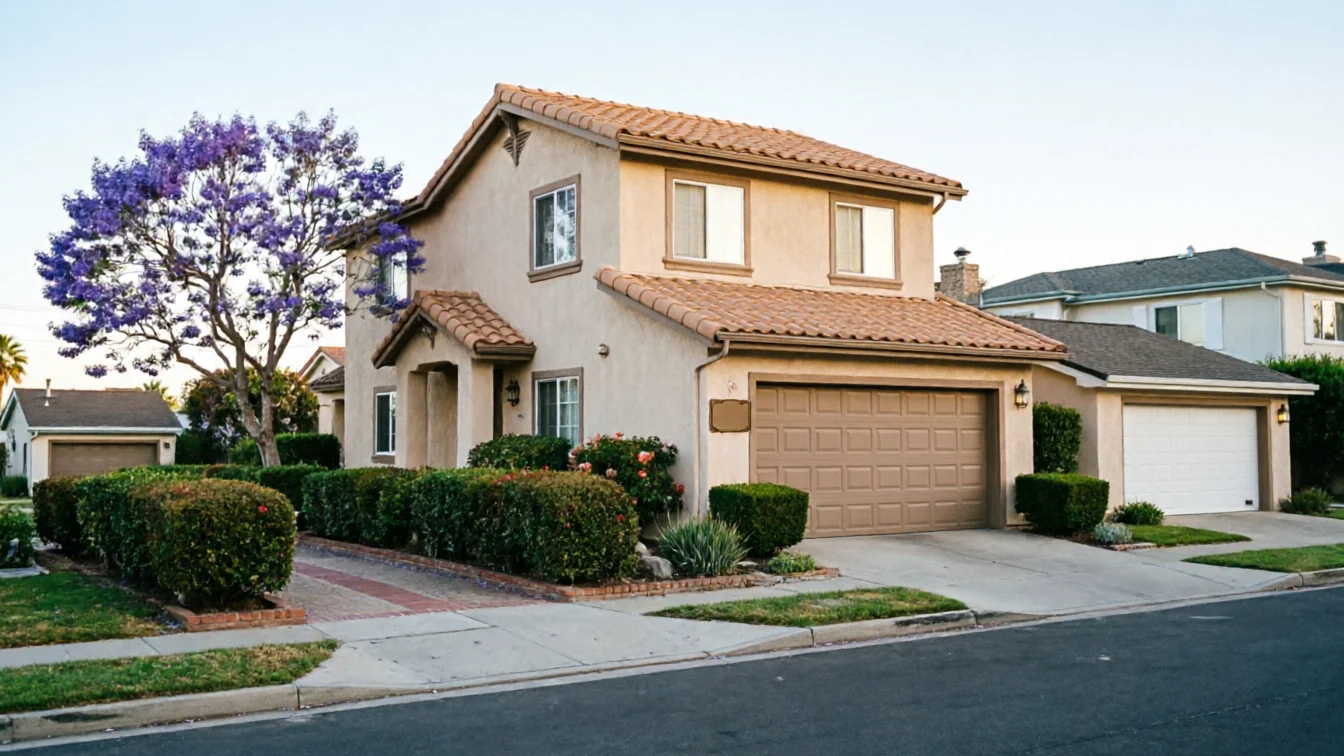
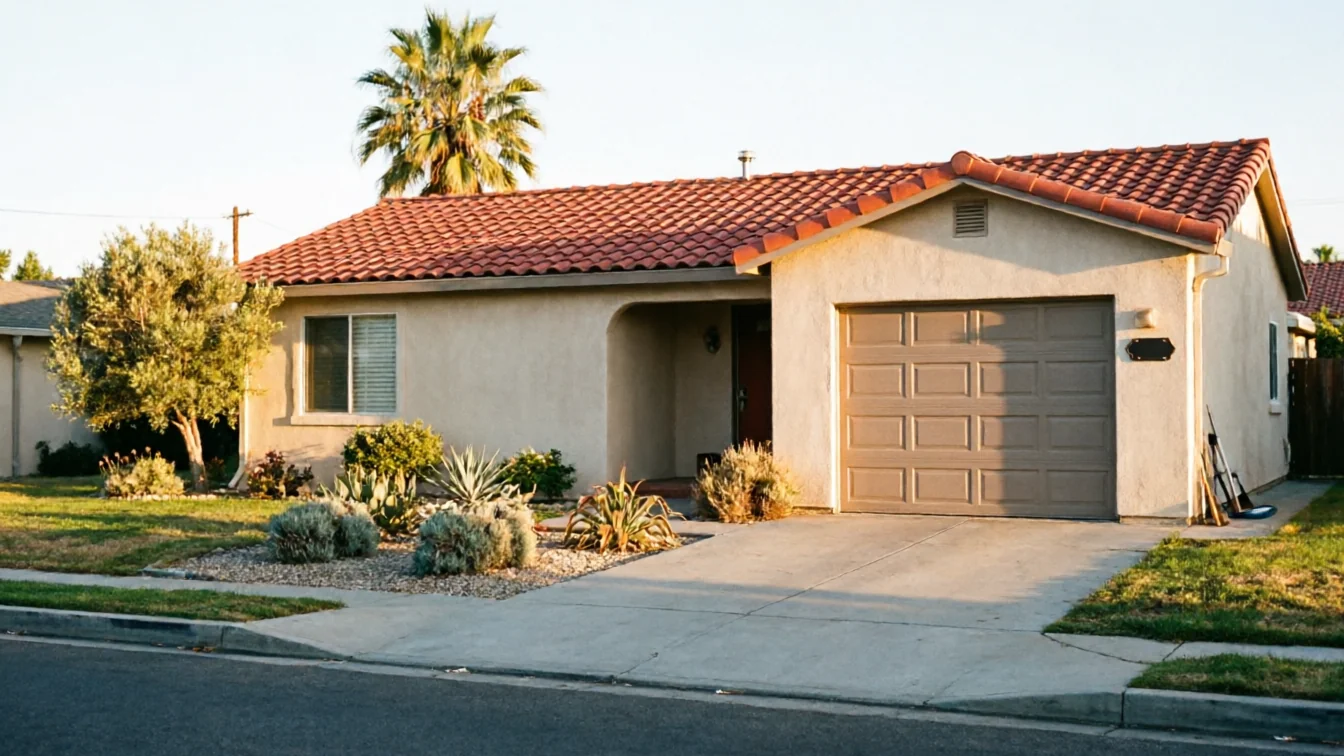
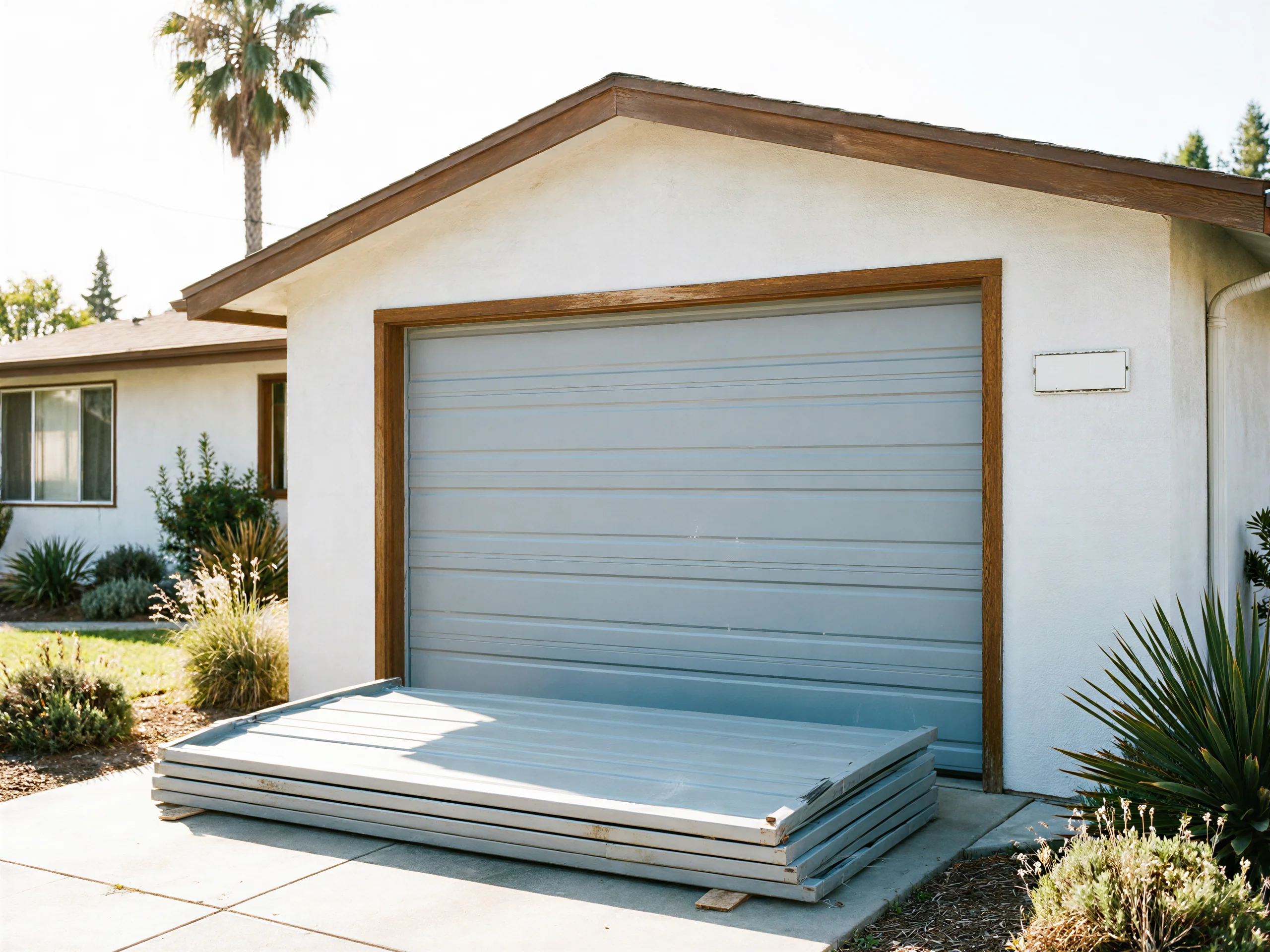
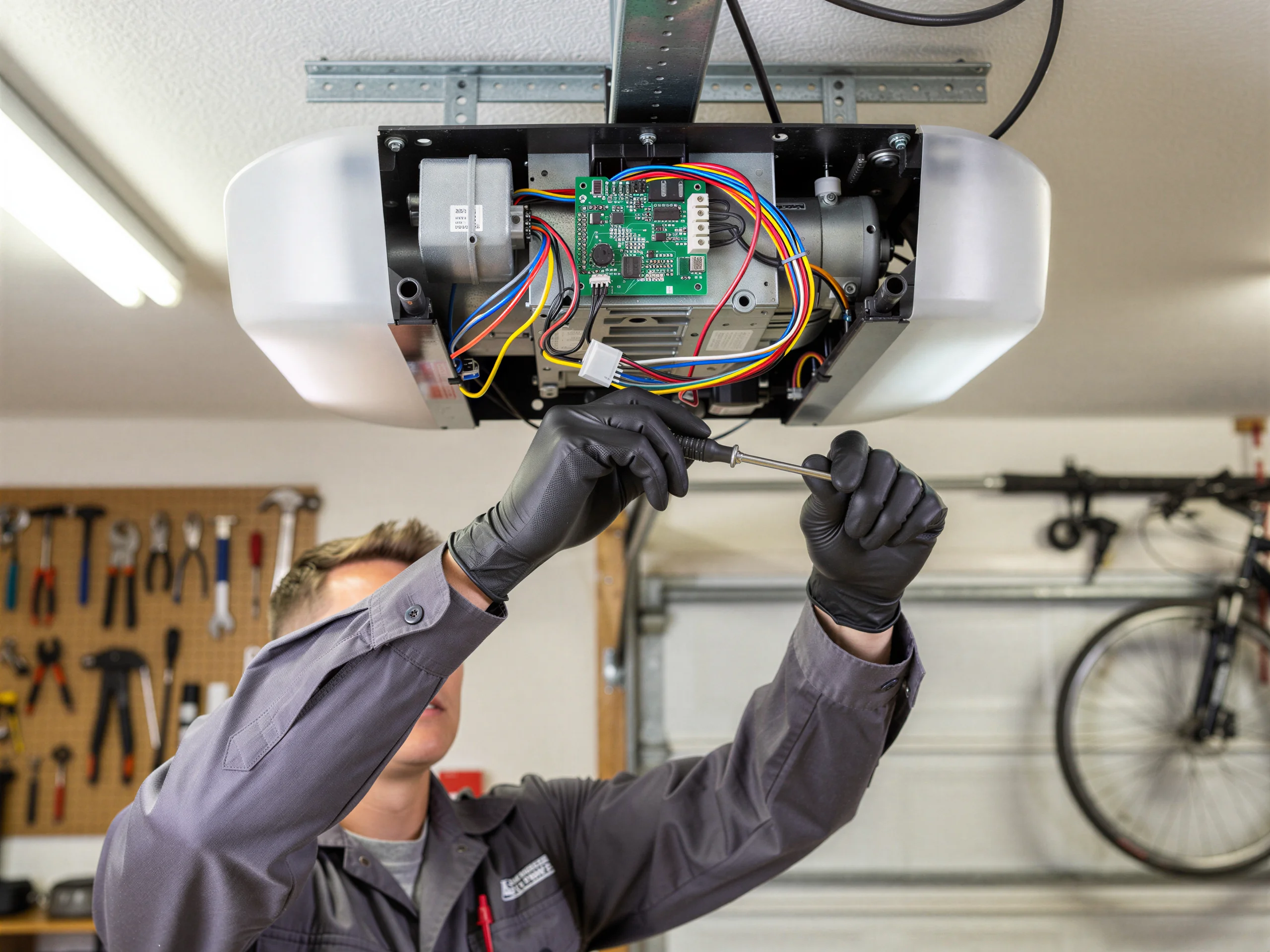
Most of the housing stock across this service area went up between the late 1970s and late 1990s, with a median build year sitting around 1983. That means a huge share of the openers on these doors are the original chain-drive units, or a first replacement installed sometime in the 90s or early 2000s on 1/3 horsepower motors that were fine for the lighter doors of that era but struggle on the heavier insulated steel doors homeowners put in later. When a two-car door gets upgraded but the opener doesn't, the motor is doing more work than it was built for, and that shows up as slow travel, grinding gears, or a unit that just stops responding. The mild temperate climate here doesn't add the moisture or freeze-thaw stress you'd see elsewhere, so when an opener fails in this area it's almost always wear and mismatch, not weather. That's actually good news for installation: we're not fighting rust or warped rail, just swapping a tired motor for one sized to the door it's actually lifting. Across the roughly 20 named communities in this service area, the mix of 80s and 90s production-built tracts means this same mismatch shows up house after house, which is why opener installation here is less about diagnosing a mystery and more about matching horsepower, drive type, and safety sensors to a door that's often newer than the motor running it.