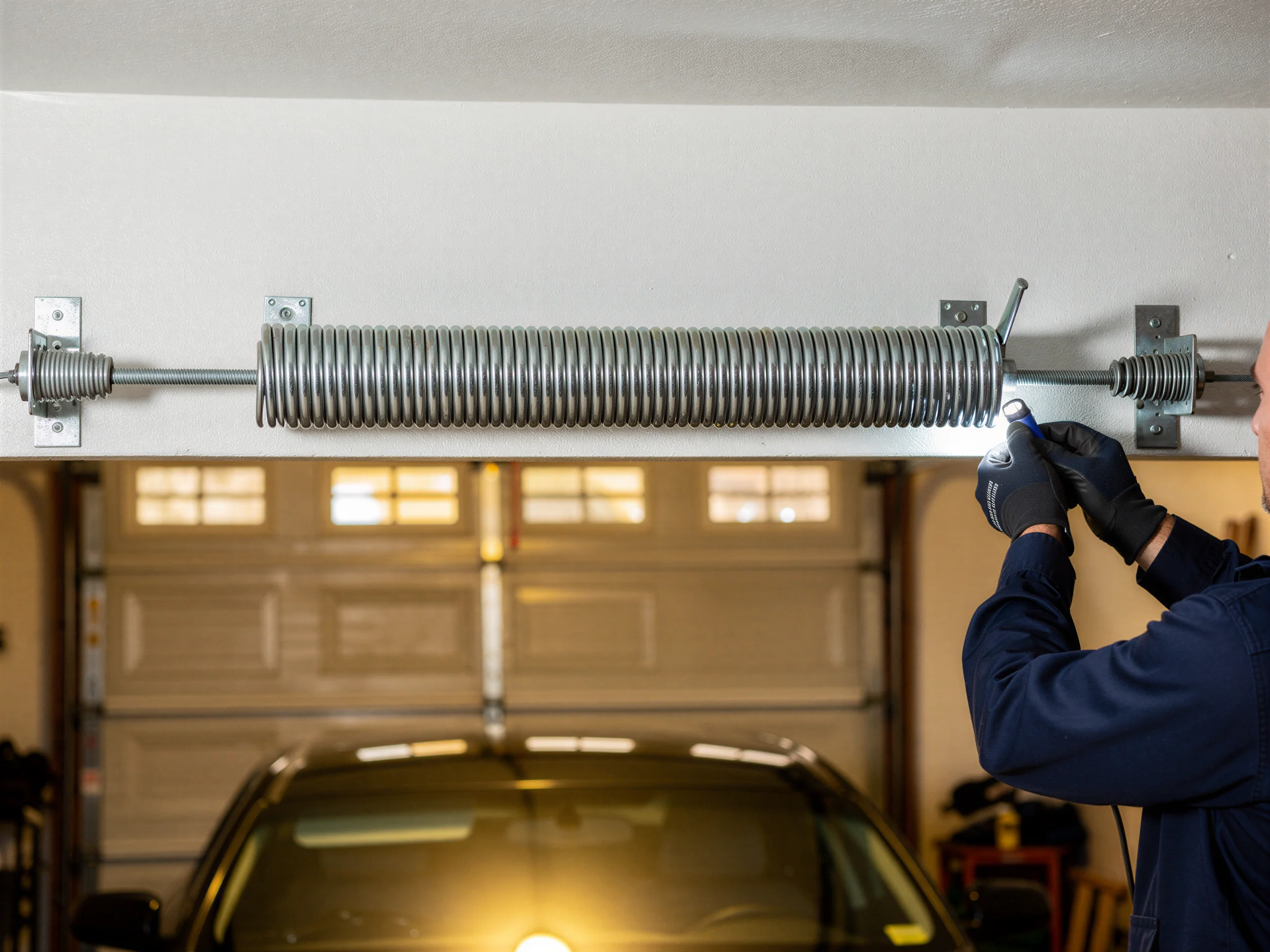
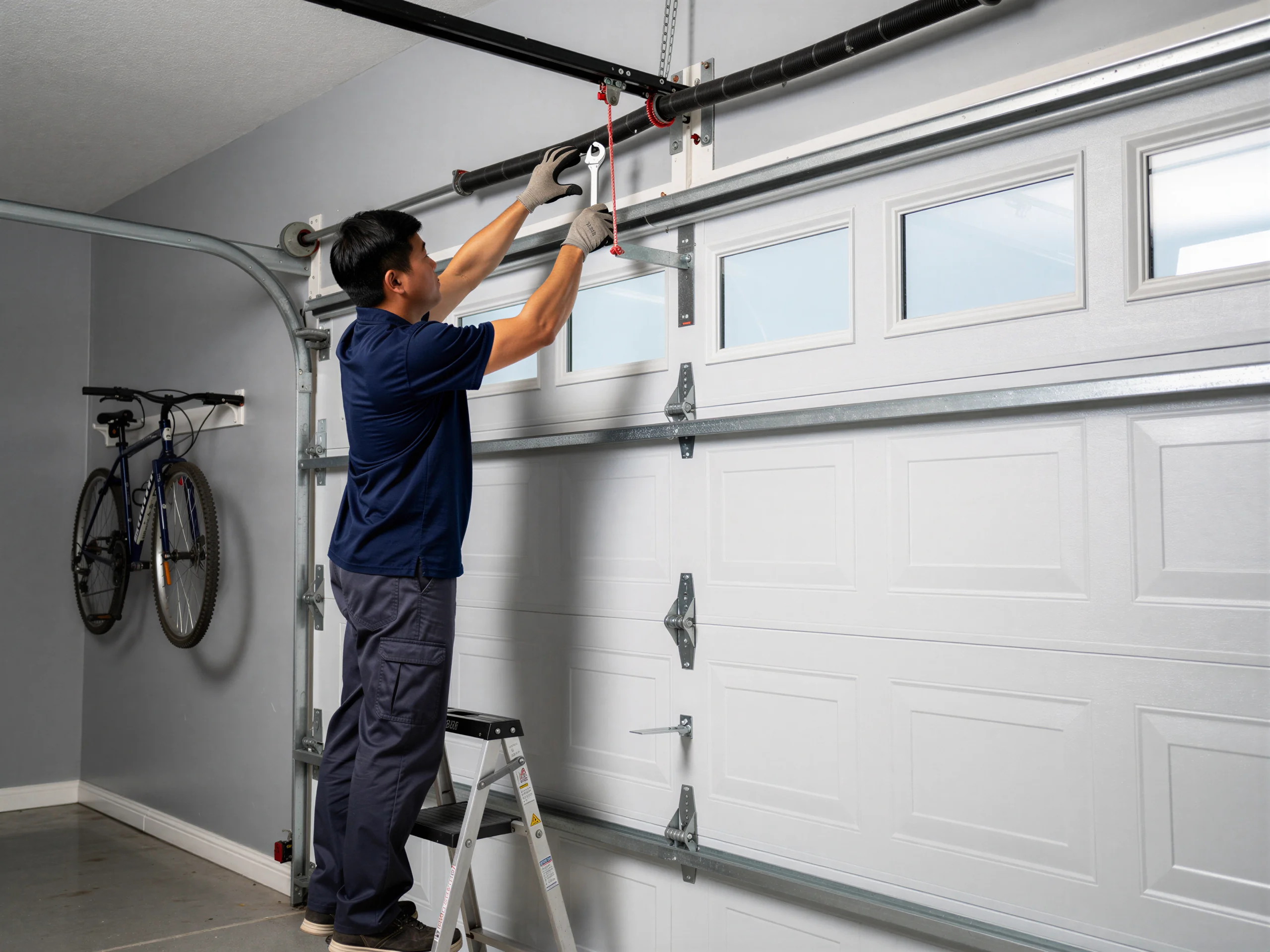
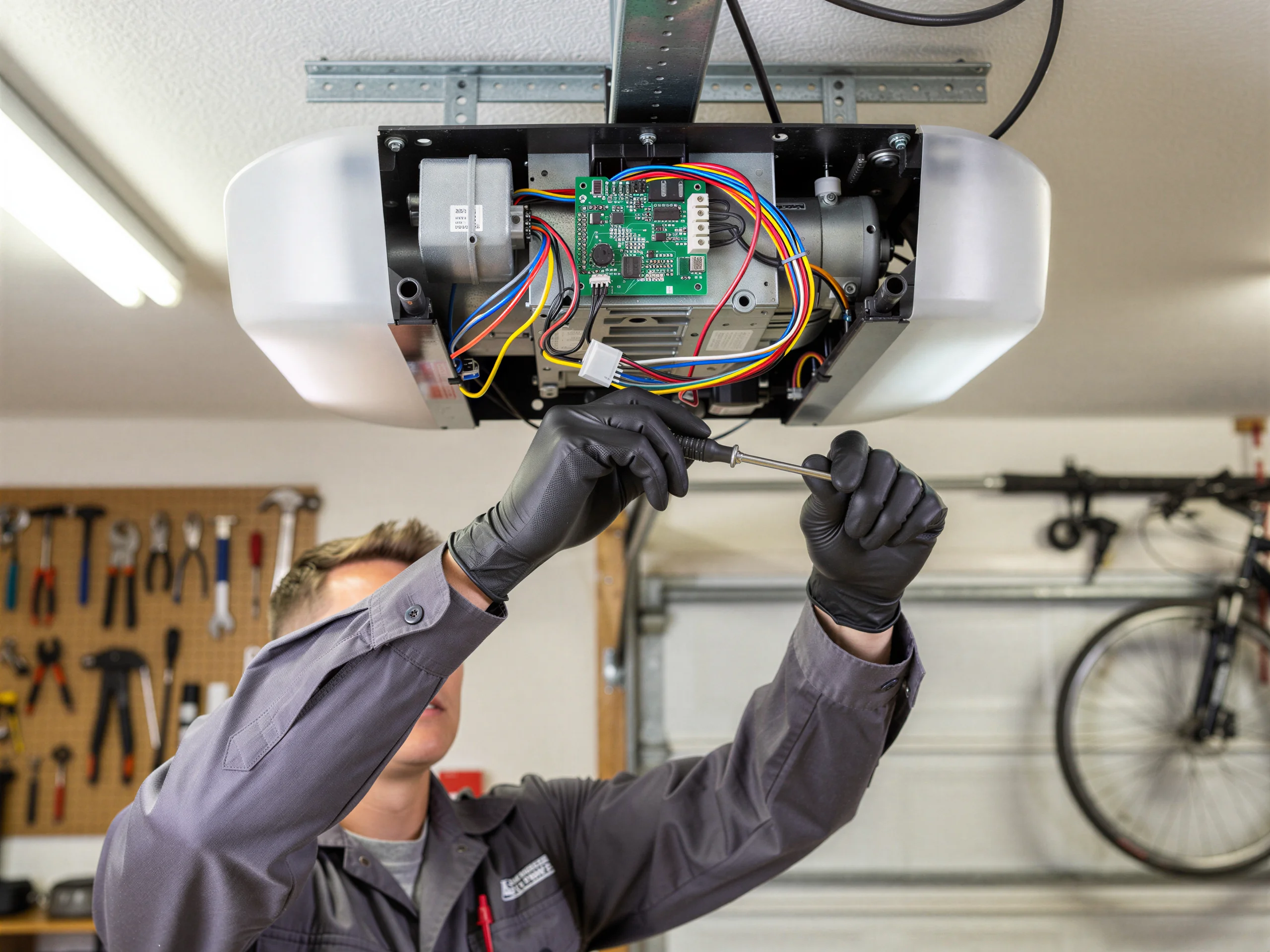
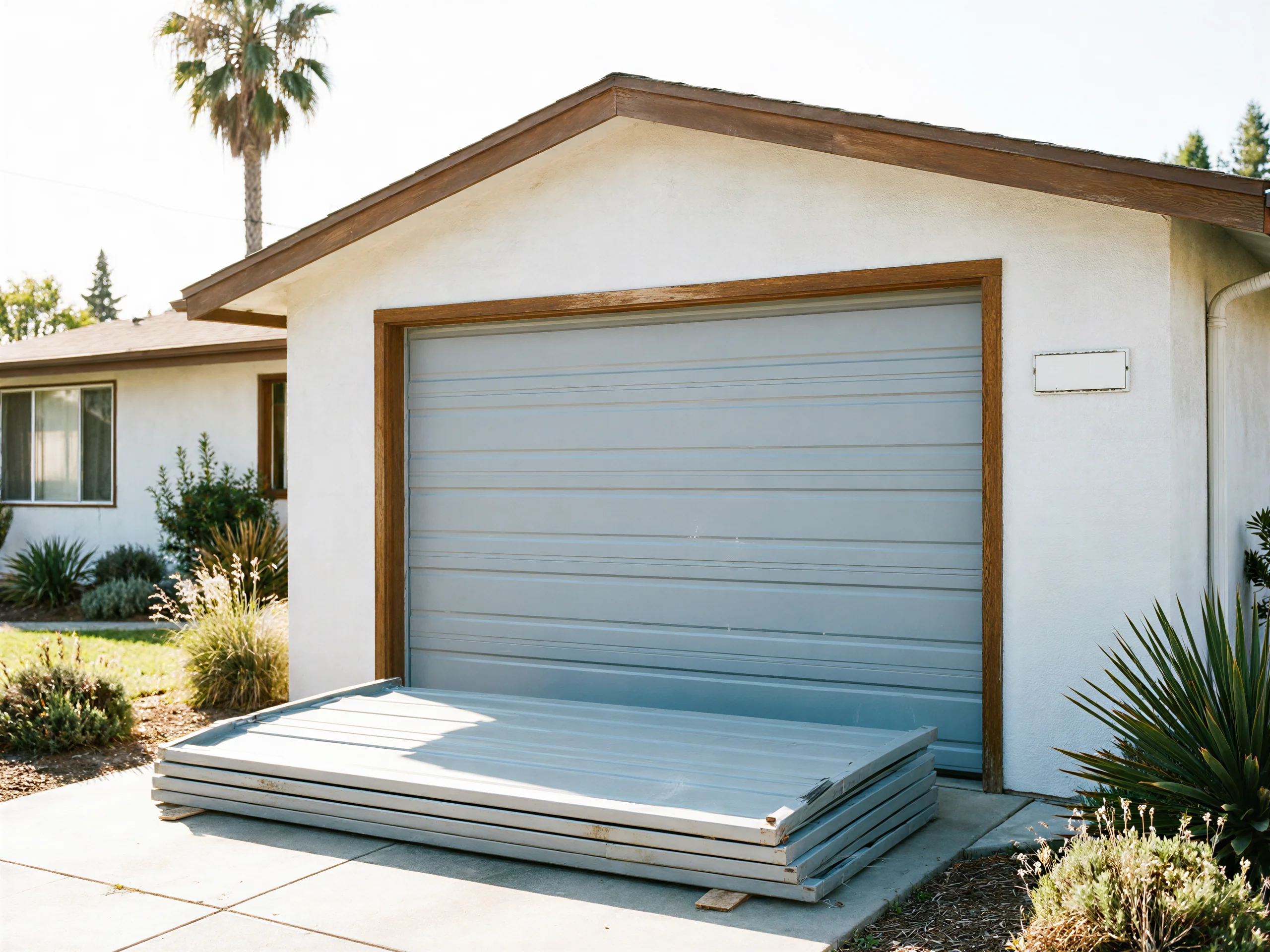
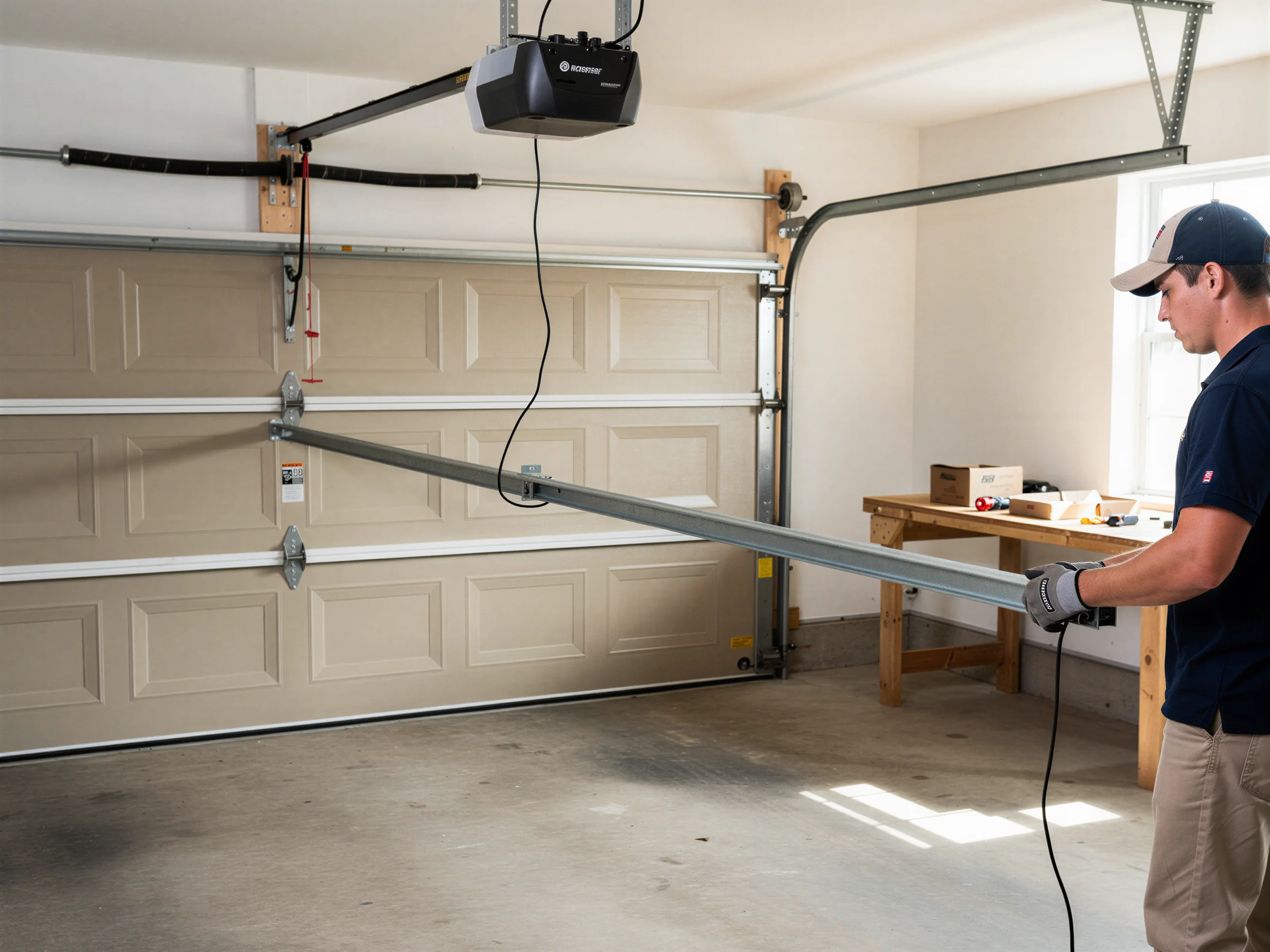
Housing across this service area was built between 1938 and 2015, with the median landing around 1983, and most of the stock across the 20 named neighborhoods dates to the 1980s and 90s. That matters for springs more than almost any other part. A torsion spring is rated for a cycle count, not a calendar year, and a door built in the Reagan era has been through a lot more open-close cycles than a door built in 2015, even on the same street.
What this area doesn't have is the freeze-thaw cycling that snaps spring steel cold in harsher climates. The mild temperate band here means springs don't fail from a cold-morning shock the way they do up north. They fail from plain fatigue - metal that's been wound and unwound tens of thousands of times finally lets go, usually on an otherwise ordinary morning. That's the mechanism we see on 80s and 90s builds mostly: the original spring, never replaced, finally at the end of its rated life.
Newer builds aren't immune either. A 2015 door with a spring sized wrong for the door weight, or a cheaper spring swapped in at some point, fails early for a different reason - it was never matched to the load in the first place.