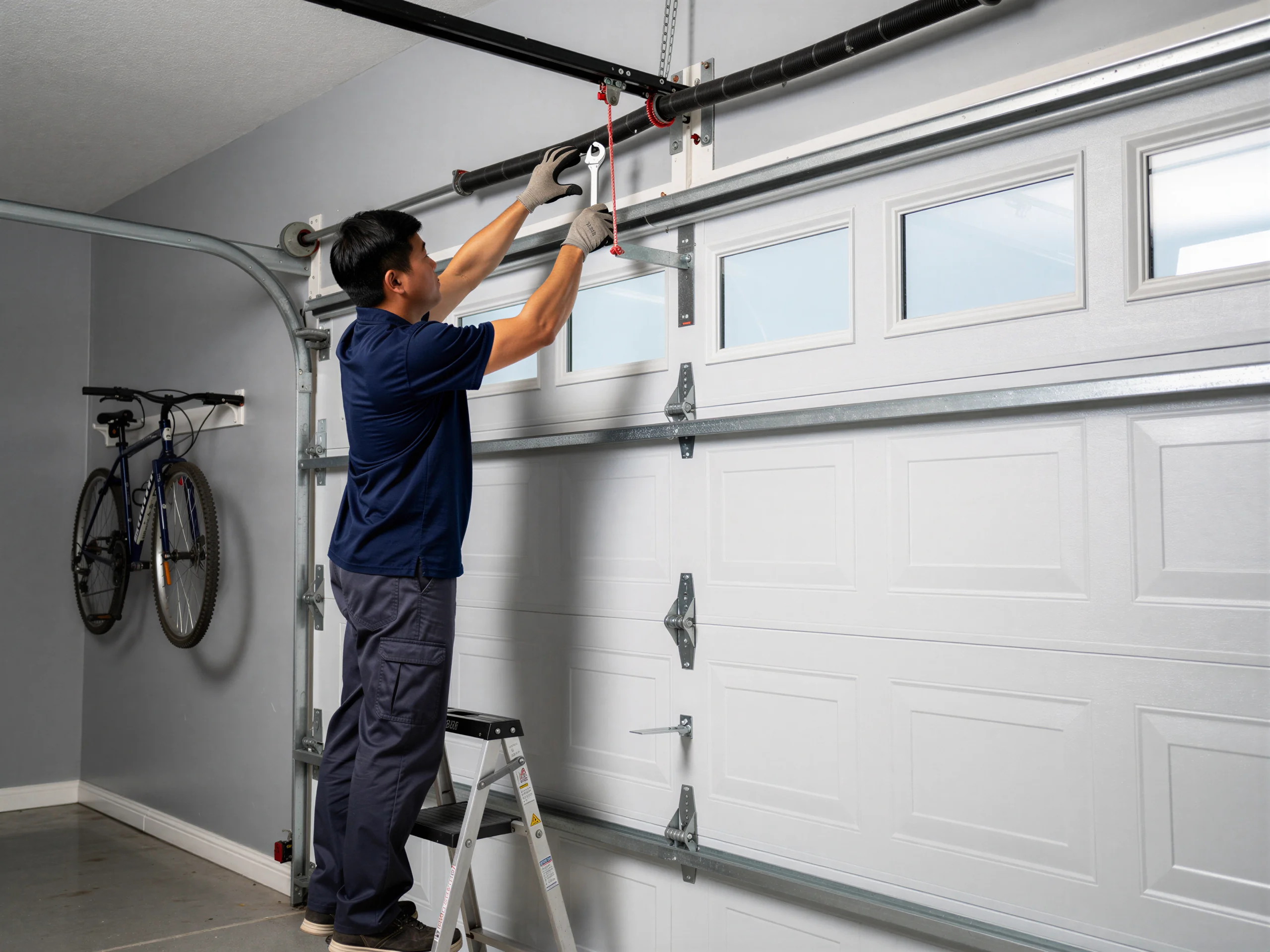
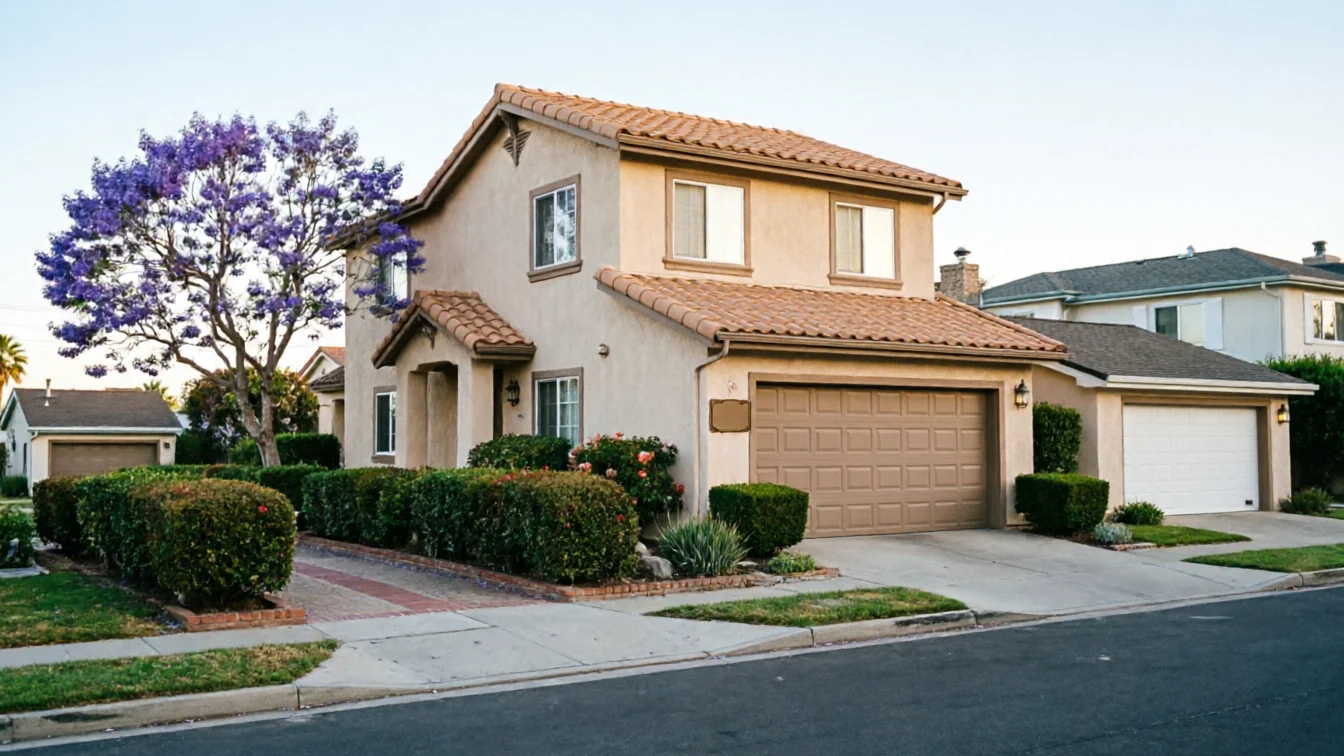
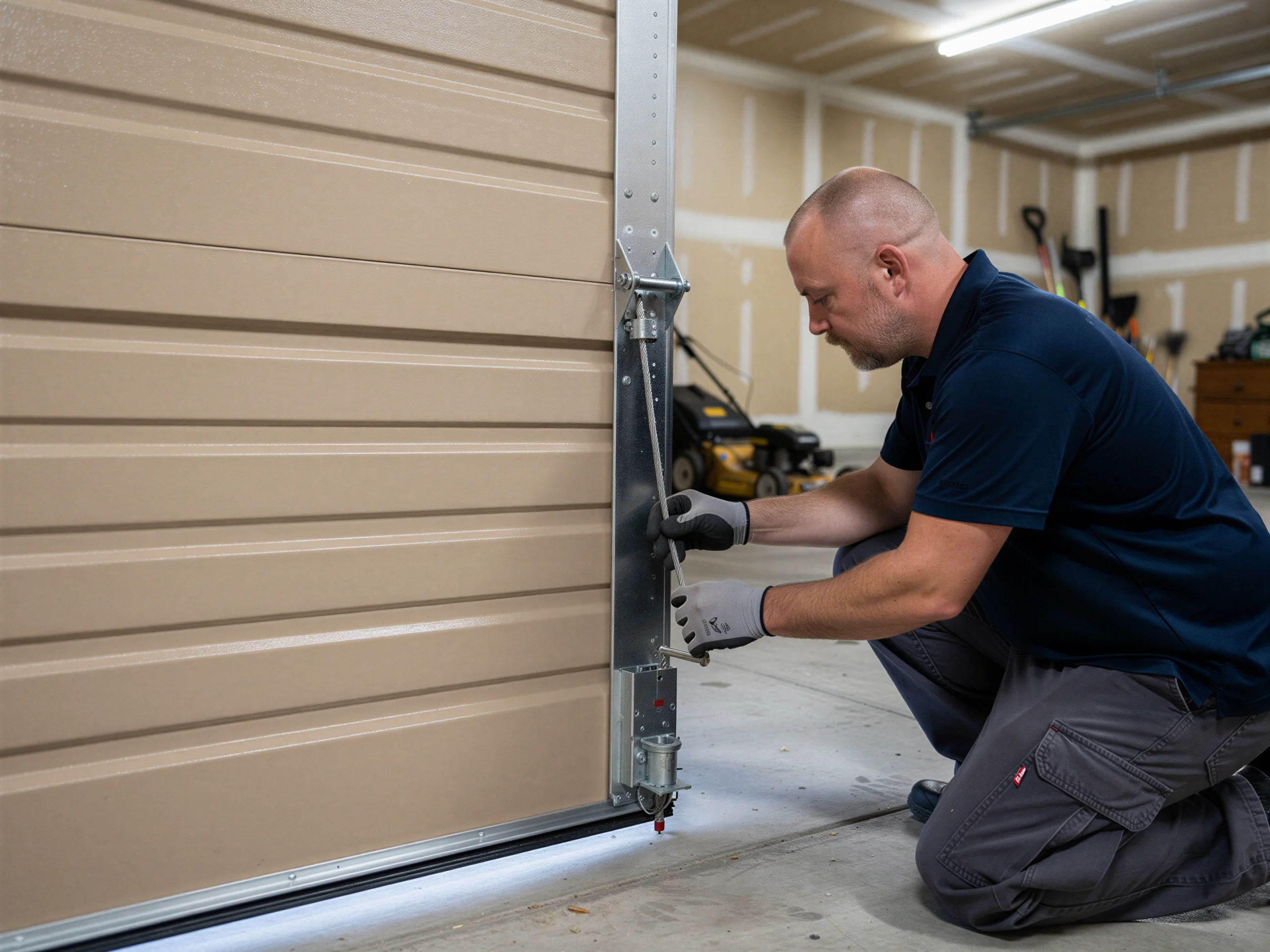
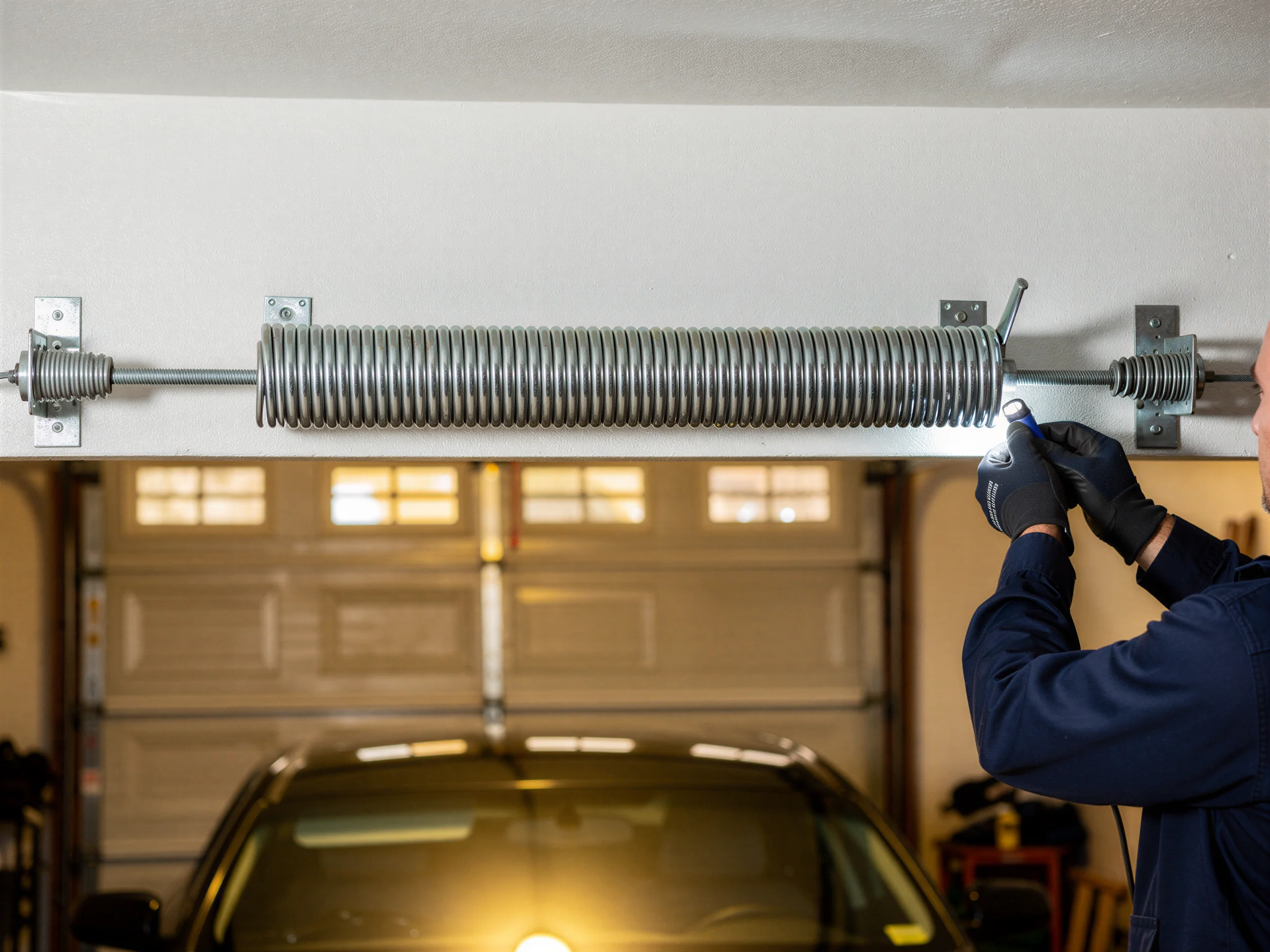
Most of the housing stock around Mission Viejo went up between 1938 and 2015, but the median build year sits at 1983, and the bulk of it is 1980s and 90s construction. That matters more than weather does. A torsion spring is rated for a set number of open-close cycles, usually somewhere around 10,000, and a door that's been going up and down twice a day since 1986 has already used most of that up. When one street went up in the same five-year window, the springs on that street are aging out together.
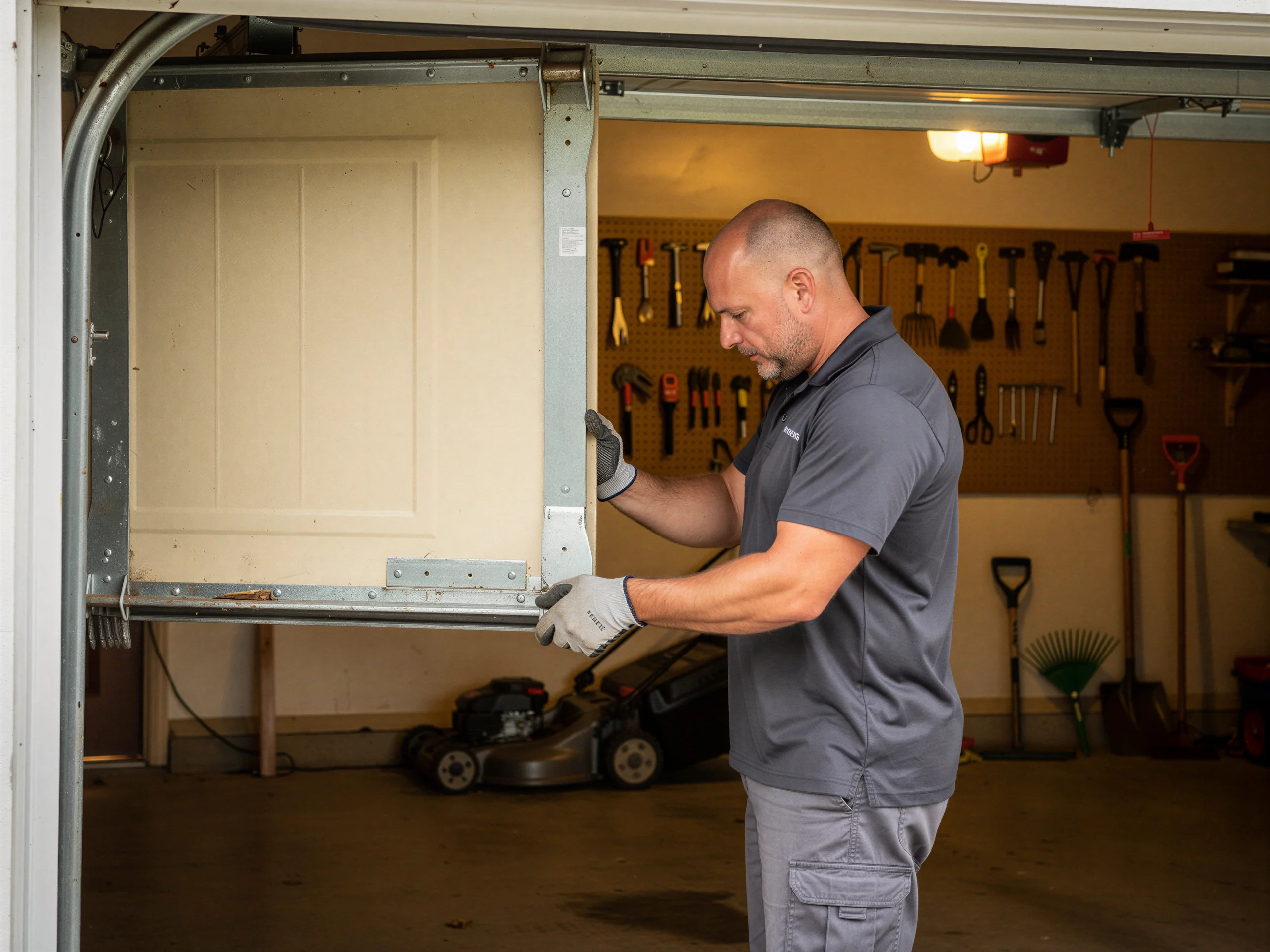
What's different here is the climate side of the equation. Mission Viejo sits in a mild temperate band - no hard freezes, no ice splitting rubber seals, no snow load on the track. So when a door fails, it's almost never a weather event that did it. It's just metal fatigue from years of cycling, plus UV breaking down the lubricant on rollers and hinges faster than the manufacturer's spec sheet assumed. That's the real story in a lot of these 1980s and 90s tract homes: original hardware, original springs, decades of cycles, and a dry warm climate that masks how worn the parts actually are until the spring lets go all at once.